

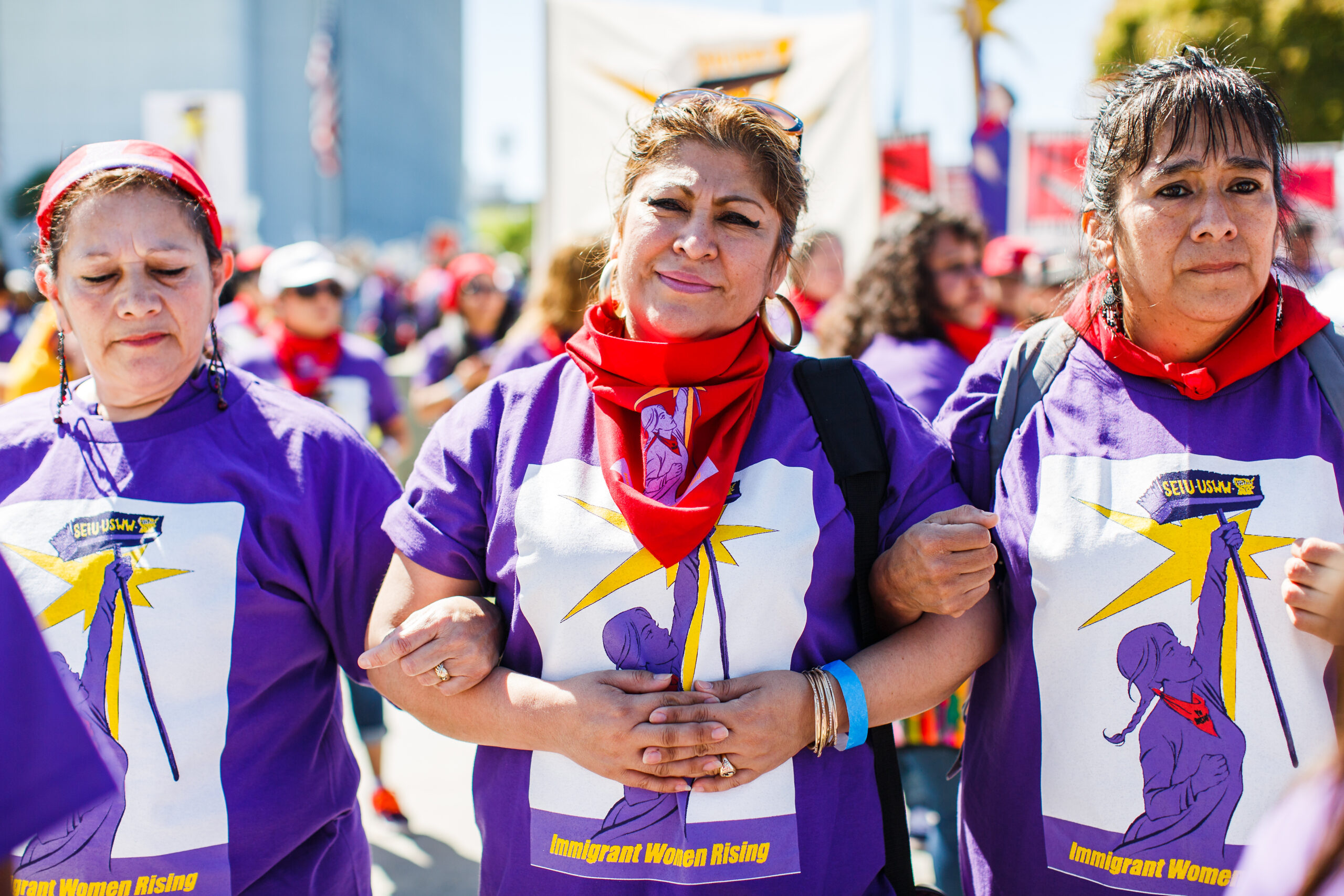
Over 100 USWW security officers and community allies gathered on the West Steps of the California State Capitol today, joined by a drum line, to demand stronger training standards for the workers who keep California’s communities safe.
The rally called on state lawmakers to pass SB 1203, the Stand for Security Act, legislation that would increase training requirements for private security officers—the essential workforce that protects hospitals, schools, and communities across California.
“For too long, the private security industry has treated security officers as disposable —underpaid, undervalued, and undertrained,” said SB 1203 author, Senator Lola Smallwood-Cuevas who spoke before the rally. “That has to end now. When we fail security officers, we fail public safety. We fail our communities.”
Security officers at the rally shared firsthand accounts of the growing dangers they face on the job and why stronger standards are urgently needed.
“Every day, security officers like me protect the people you care about, but most people don’t notice us until something goes wrong,” said LaTasha Reed, a Bay Area security officer. “Our jobs have become more dangerous every year, but the training hasn’t kept up with the risks.”
“What surprised me when I entered private security was that the basic guard card training does not require meaningful de-escalation instruction,” said Earl Hays, a hospital security officer in Sacramento and retired sheriff deputy. “There is no requirement for practical, scenario-based training, even though communication is one of the most important tools we use.”
“Too many of us are assaulted, threatened, spit on, or injured simply for doing our jobs,” said Keven Adams, a security officer who was once held at gunpoint while on the job. “Some security officers have even lost their lives. At the end of every shift, every one of us wants the same thing everyone else does—to go home safely to the people waiting for us.”
Security officers described responding to mental health crises, drug overdoses, workplace violence, and other unpredictable situations while often lacking the preparation needed to safely handle them.
According to a report by the University of California Labor Center, Black, Latino, and immigrant, and workers of color make up the private security workforce in the state. The report also found that roughly 80% of California security officers earn below a living wage, with a median of about $20 an hour, against $28 for the typical California worker. Four in five work full time, yet only about half have employer or union health coverage. In California, the turnover rate is over 90% in the private security industry, meaning that most security officers are inexperienced at their posts.
“That’s not an accident. That’s injustice,” said David Huerta, President of SEIU-United Service Workers West. They’re being punched. They’re being assaulted. And tragically, fatally injured. And far too often, they’re expected to de-escalate life-threatening situations without the hands-on training those moments demand.”
Currently, California requires only eight hours of initial training before many security officers are sent into potentially dangerous situations. Security officers from across the state have reported that those minimal standards leave both workers and the public at risk.
“SB 1203 isn’t just about security officers—it’s about protecting everyone,” said Alexander Nuñez, a Los Angeles-based security officer. “Better training means better decisions under pressure. It means stronger de-escalation skills. It means fewer injuries. Professional security doesn’t happen by accident. It requires the training and the support we need to do the job safely.”